Lee,Chia-Pyng
|
|
|
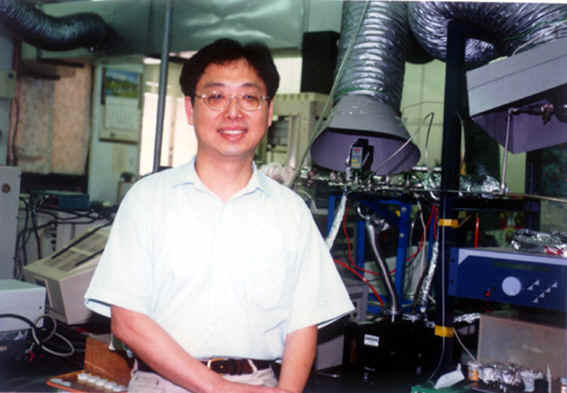 |
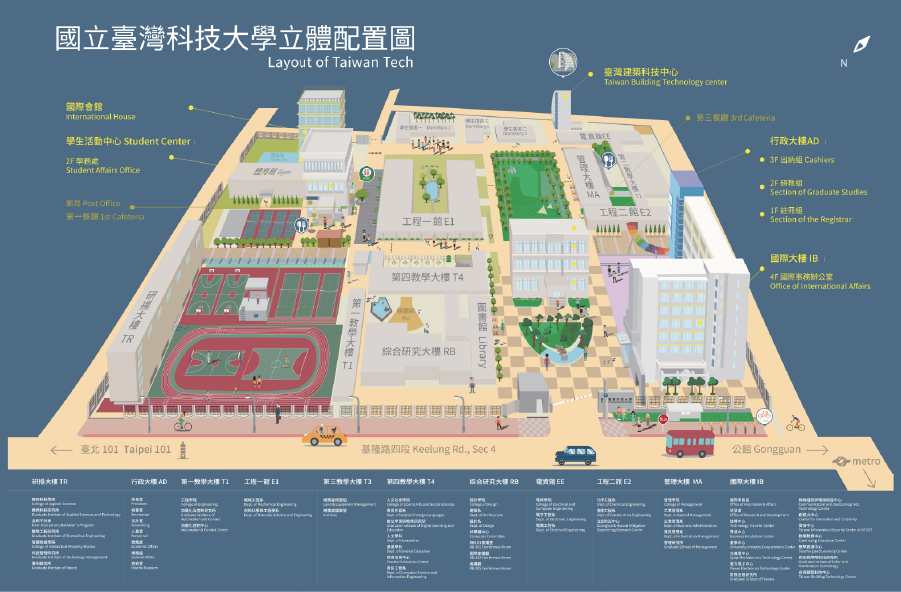
Chia-Pyng Lee Professor Office Location:E2-506 |
|
Education & Honors: |
|
|
Ph.D: University of Minnesota, 1986 Honors: 1990~2001, National Science Council (Taiwan, R.O.C.) Annual Research Award Experience: Professor Lee served as an IC process engineer at Cray Research in 1986-1988. He had a patent:"Low temperature growth of silicon epitaxy". |
|
| Research: | |
|
It’s only about forty years since 1958, the beginning of the integrated-circuit (IC) era , the sales of electronic products have increased by about thirty times. The main impetuses of such phenomenal market growth are the intrinsic pervasiveness of electronic products and the continued technological breakthroughs in IC. The popularization of internet and personal computer is the trend of future. All the industrial countries have put into lots of effort on the establishment of information super-highway in order to increase the capability competition. After graduation from University of Minnesota, Professor Lee served as an IC process engineer at Cray Research in 1986-1988. During this industrial employment, he found that many IC processing technologies such as chemical vapor deposition, oxidation, diffusion and plasma etching are easily picked up by chemical engineers. Of course, the early research and development of technologies were done by electronic engineers. However the shrinkage of the design rule put tremendous pressure on the process development. Professor Lee believed that this is about the time for chemical engineers to put more effort into the R & D. Therefore, Professor Lee's research interests are closely related to the IC processing. Due to the dramatic development in energy and biotechnology, Professor Lee has also applied the IC fabrication techniques on fuel cells and biosensors in recent years. |
|
| Selected Publications: | |
|
|
|
|
|
|
Last Updated: 2008.01.09 |
|
|
|
|